
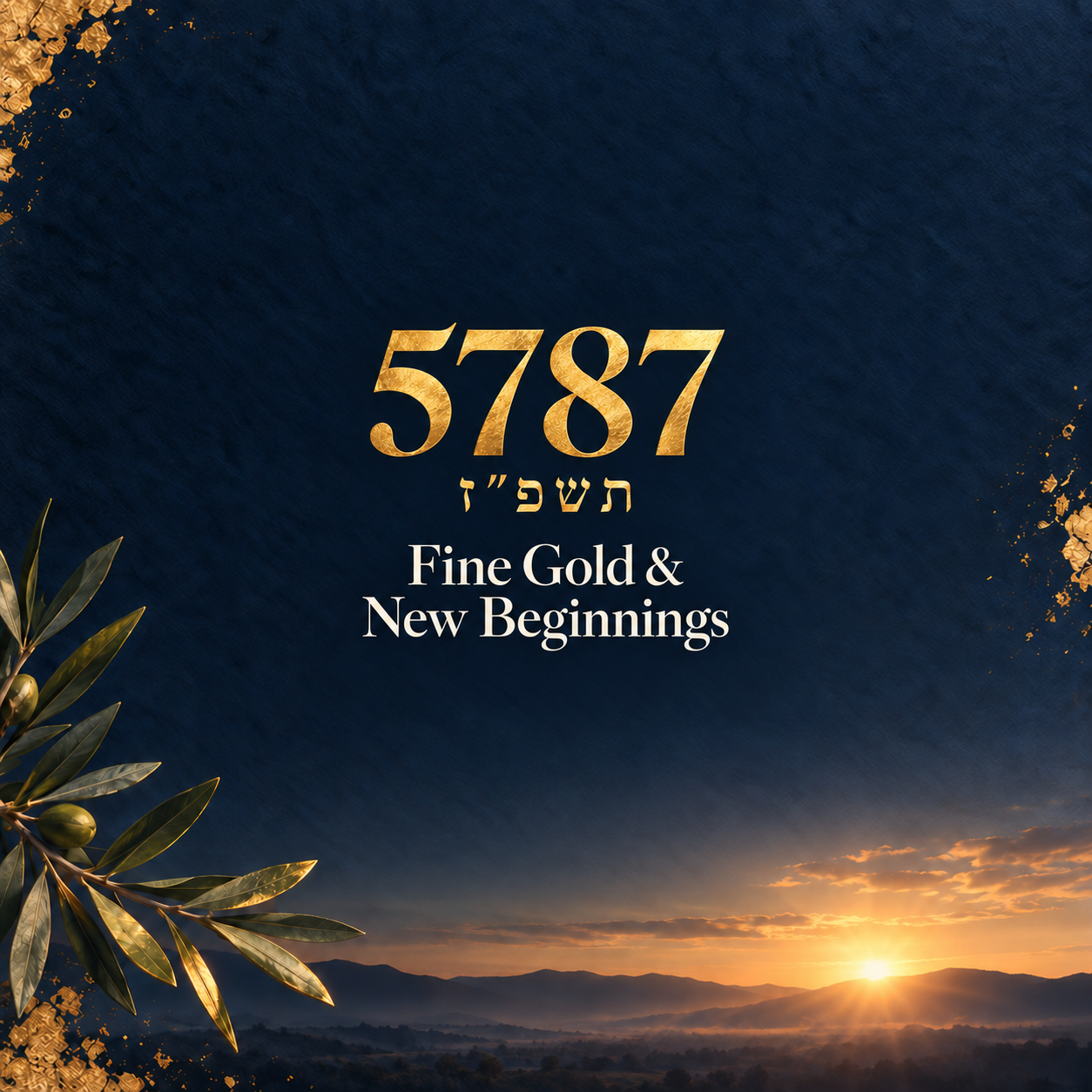
The Jewish year 5787 began at sunset on 11 September 2026, with Rosh Hashanah, the Jewish New Year. Its Hebrew letters offer a thoughtful way to reflect on the year ahead. Calendar dates.
One connection stands out: paz, the Hebrew word for fine gold. It invites a simple question: what would make this a precious year?
The number 5787 comes from the Jewish calendar’s traditional count of years from Creation. Hebrew letters can also stand for numbers, so a date can be written using letters.
The year is commonly written תשפ״ז. Read from right to left, these letters are tav, shin, peh and zayin. Their values are 400 + 300 + 80 + 7 = 787. The five thousand is often left out when writing the date because it is understood. Hebrew letter values.
The last two letters, פז, have a combined value of 87. They also spell paz, meaning fine gold.
A teaching from Rabbi Yitzchak Ginsburgh, published by Gal Einai, uses the year’s letters to form a blessing: Tehei shnat paz — “May it be a year of gold.”
Here is how it works: tav and shin are the first letters of the Hebrew words tehei and shnat, meaning “may it be” and “a year of.” Peh and zayin then spell paz. Together, the letters of the date become a hopeful phrase.
This is a creative reading of the letters, not the literal meaning of 5787. The teaching presents the year as an opportunity to draw closer to God and Torah, the teaching at the heart of Jewish life. The teaching behind the blessing.
The Bible gives “fine gold” a deeper meaning. In Psalm 119:127, the writer says that God’s commandments are worth more to him than gold, even fine gold. The Hebrew word paz appears in this verse.
The point is simple: knowing how to live well has greater value than wealth. This gives us a way to reflect on 5787 through the choices we make each day.
A precious year might include repairing a friendship, keeping a difficult promise, or helping a family in need. It might mean becoming more honest in our work or more patient at home.
Another Jewish way of exploring Hebrew letters is called gematria. Each letter has a number value. Adding the letters gives a total for a word or phrase. Teachers sometimes compare matching totals to suggest a connection between ideas.
For example, the same teaching notes that the Hebrew phrase “you shall rejoice in your festival” totals 787, matching the shortened year number. The connection becomes an invitation to think about joy. It does not prove that the year will be easy or free from sadness. The gematria example.
These are particular Jewish interpretations, rather than beliefs held by every Jewish community. They offer ideas to reflect on, without telling us what the future must bring.
For us in the Pacific, that reflection can begin close to home. We can make time for family, treat people fairly, share what we have and give thanks for the good around us.
We cannot know everything that 5787 will bring. We can choose to use the time before us with care.
May it be a year of gold: a year in which we recognise what is precious and give it more room in our lives.
Lev Tziyon Pacific